Chemist Find
 · Editor · services · 4 min read
Clinical review: pending
How to find an NDSS pharmacy in your suburb
A guide to locating registered National Diabetes Services Scheme (NDSS) access points in Australia to collect subsidised diabetes supplies.
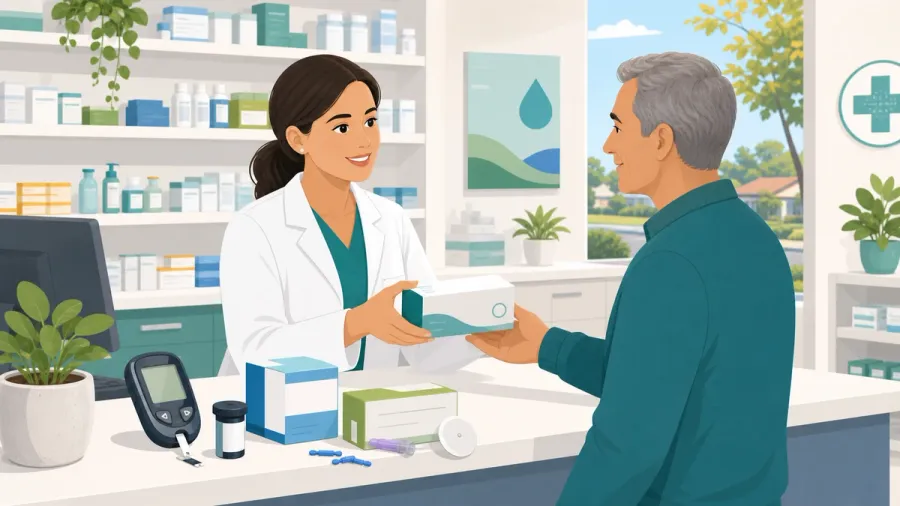
Living with diabetes means a steady, lifelong relationship with supplies: test strips, pen needles, pump consumables, glucose sensors. Paying full retail for all of that would add up fast. The National Diabetes Services Scheme (NDSS) exists to take the sting out of it, helping eligible people access subsidised diabetes products through registered access points. The good news for day-to-day life is that many of those access points are ordinary community pharmacies, so you can usually collect what you need close to home, near work, around the corner from the kids’ school, or while you are travelling.
There are two pieces to the puzzle. You need to be registered with the NDSS, and you need the right eligibility for the specific product. A pharmacy can process your order, but it cannot approve every product for every person, so it helps to know what you are entitled to before you go.
Products you may collect
Depending on your diabetes type, your treatment plan, and your NDSS eligibility, an access point may supply:
- Blood glucose test strips and urine test strips.
- Pen needles and syringes.
- Insulin pump consumables.
- Continuous and flash glucose monitoring products for eligible people.
Some of these, particularly specific sensors, pump items, or larger quantities, may need to be ordered in rather than kept on the shelf. A quick phone call before you visit saves a wasted trip when you are already running low.
What to bring
Bring your NDSS number or card and your Medicare details if needed. If someone else is collecting supplies on your behalf, a partner or carer for example, ask the pharmacy in advance what details they need so the person is not turned away at the counter.
There is one trap worth knowing about. Ask the pharmacist to check that your product choice still matches your current device and treatment plan. A seemingly small change in your meter, pump, or sensor model can make a whole box of old consumables useless, and people regularly stock up on the wrong strips after a device upgrade. A thirty-second check avoids an expensive drawer of mismatched supplies.
Why a regular access point pays off
You can use any NDSS access point, but choosing a regular one has quiet advantages. The staff get to know your devices, your ordering pattern, and your preferred collection times. They can anticipate when you are due, flag when a product is changing, and have your usual sensor ready rather than ordering it from scratch each month. For something you will be doing for years, that familiarity is worth a lot.
Practical Example: A man newly diagnosed with type 2 diabetes registers with the NDSS through his diabetes educator and is unsure where to get his test strips affordably. He searches for pharmacies for an NDSS access point near home, phones to confirm they stock his strips, and brings his NDSS card on the first visit. The pharmacist sets him up as a regular, notes which meter he uses, and now has his strips and pen needles ready each month. When he later switches to a flash glucose monitor, the same pharmacy checks his eligibility and orders the sensors in, so he never pays retail or buys the wrong product.
Finding an access point
Use search for pharmacies and filter for NDSS, diabetes supplies, or diabetes services. Phone ahead to confirm stock for anything beyond the basics.
If you are moving house, travelling interstate, or helping a relative manage their diabetes, browse pharmacies in NSW, pharmacies in Victoria, or another state page and compare opening hours before you run low. Because the scheme is national, your registration travels with you.
Official sources to check
Use official NDSS information for eligibility and product rules:
Choose a regular access point if you can, register before you need supplies, and check your products still match your device. Those three habits turn diabetes supply from a recurring chore into something that mostly takes care of itself.