Chemist Find
 · Editor · services · 4 min read
Clinical review: pending
Guide to pharmacy vaccination services in Australia
Discover how to access convenient immunisation services at your local community pharmacy without waiting for a GP appointment.
A decade ago, getting a flu shot meant booking a GP appointment, sitting in a waiting room, and often paying a consultation fee on top. Today you can walk into the chemist on your lunch break, get jabbed in a private consultation room, and be back at your desk in fifteen minutes. Pharmacy vaccination has quietly become one of the most-used health services in the country, and the range of vaccines pharmacists can give keeps growing.
The exact vaccines, age limits, and funded programs differ by state and territory, so the golden rule is to check before you book. What a pharmacist in Victoria can offer a five-year-old is not always the same as what a pharmacist in Tasmania can offer, and the rules change as state programs expand.
How a pharmacy vaccination visit works
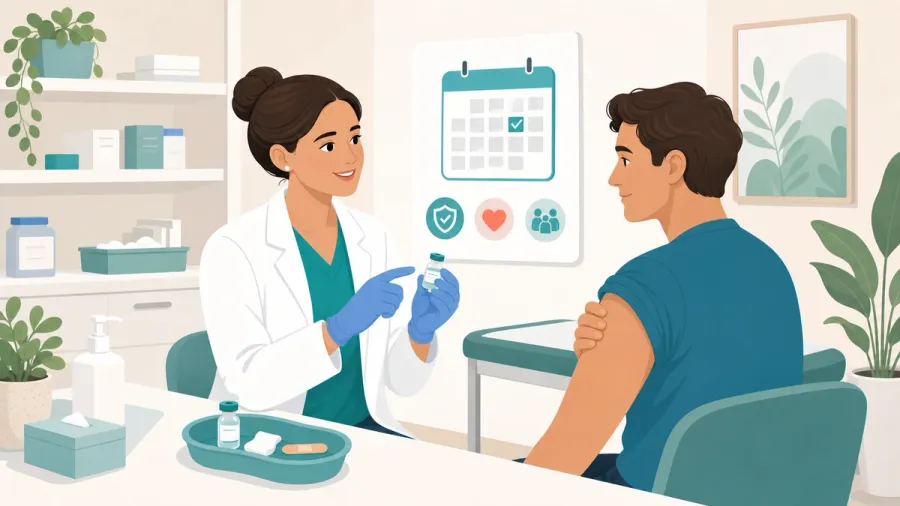
A pharmacist vaccinator should take you somewhere private, ask a set of screening questions about your health, allergies, and medicines, give the vaccine, and then ask you to wait nearby for around fifteen minutes so they can watch for any immediate reaction. They will record the vaccine and, in almost all cases, upload it to the Australian Immunisation Register, which means it shows up in your Medicare immunisation history and on your child’s records.
For some patients, a GP or specialist clinic is still the better setting. Infants below the pharmacy age cut-off, people with a history of severe vaccine reactions, anyone who is significantly immunocompromised, and complex medical cases are often better off seeing a doctor who has their full history in front of them.
Vaccines commonly offered
Many pharmacies offer:
- Influenza every autumn, the bread and butter of pharmacy vaccination.
- COVID-19 boosters in line with current ATAGI advice.
- dTpa boosters for whooping cough, frequently used by grandparents and other adults who will be around a new baby.
- Shingles (herpes zoster) vaccination for older adults, which is funded under the National Immunisation Program for eligible age groups.
- Pneumococcal vaccination for eligible older adults and some at-risk patients.
- Selected travel vaccines such as hepatitis A, hepatitis B, and typhoid.
Availability depends on the pharmacist’s training, your state’s rules, what is in stock, and your age and medical history. Children’s eligibility in particular has expanded in recent years, but the minimum age still varies by jurisdiction and by vaccine.
What it costs
Some National Immunisation Program (NIP) vaccines are funded for eligible people, meaning the vaccine itself is free, though the pharmacy may still charge an administration or consultation fee for giving it. Other vaccines, especially travel vaccines and flu shots for people outside the funded groups, are private items you pay for in full. Always ask for the total price before you sit down, and ask specifically whether the fee is for the vaccine, the administration, or both.
Before you book, ask the pharmacy
- Do you provide this vaccine for my age group (or my child’s age)?
- Is it NIP-funded for me, privately billed, or partly subsidised?
- Will you upload the record to the Australian Immunisation Register?
- Should I bring a Medicare card, concession card, travel itinerary, or previous vaccine record?
And tell the pharmacist about severe allergies, previous vaccine reactions, pregnancy, immune suppression, a tendency to faint after injections, or any current illness with fever. None of these automatically rule you out, but they change how the pharmacist proceeds.
Walk-in or appointment?
Walk-ins can work for a simple flu shot during a quiet mid-morning. Book ahead when you are bringing the whole family, when you need a travel vaccine or shingles vaccine that has to be ordered in, or any time stock is limited. During the autumn flu rush, booking saves you a long wait.
Practical Example: A grandmother in Geelong is about to meet her first grandchild and wants to protect the baby from whooping cough. She searches for pharmacies near home, books a dTpa booster, and mentions she is also turning 71 next month. The pharmacist checks the schedule, confirms she is now eligible for the funded shingles vaccine, and books her back in for that too. Two visits, no GP appointment, both records uploaded to the Immunisation Register before the baby arrives.
Finding a pharmacy
Use search for pharmacies and filter for vaccination, immunisation, travel health, or after-hours services. You can also browse pharmacies in Victoria or pharmacies in NSW to find a location near work, school, or home.
Official sources to check
Use national sources for vaccine schedules and eligibility:
- Australian Immunisation Handbook
- National Immunisation Program schedule
- Australian Immunisation Register
Pharmacy vaccination works best when you walk in already knowing the vaccine you want, whether you are eligible, what it will cost, and that the record will end up in the right place. A quick phone call before you go answers all four.