Chemist Find
 · Editor · services · 5 min read
Clinical review: pending
How to get UTI treatment at an Australian pharmacy
Learn how to access immediate urinary tract infection (UTI) services at local pharmacies in Australia without a GP prescription.
It usually starts on a Friday afternoon. The burning when you pass urine, the constant feeling that you need to go again, the dragging ache low in your abdomen. You ring your GP and the next appointment is Tuesday. A urinary tract infection does not wait politely until Tuesday. The good news is that across much of Australia, you no longer have to. Many community pharmacies can now assess a suspected uncomplicated UTI and, where state or territory rules allow, supply antibiotic treatment without a separate GP prescription.
That does not turn every UTI into a pharmacy job. Pharmacists work to clinical protocols, and they will send you to a doctor or urgent care when your symptoms point to a kidney infection, a pregnancy-related risk, a recurring pattern, or something other than a simple bladder infection. Knowing which situation you are in is half the battle.
Who can use a pharmacy UTI service?
Eligibility varies around the country, but most pharmacy UTI services are designed for women with the symptoms of an uncomplicated lower (bladder) UTI. Many programs use an age range such as 18 to 65. The exact criteria depend on your state or territory and the pharmacist’s training, so it is worth a quick phone call before you head in.
A pharmacist will usually ask about:
- Your symptoms, including pain or burning, urgency, frequency, blood in the urine, fever, nausea, or pain in your back or side.
- Pregnancy, breastfeeding, kidney disease, diabetes, a weakened immune system, recent UTI treatment, and any medicine allergies.
- Anything that could point to a sexually transmitted infection or a different diagnosis.
You should not rely on a pharmacy UTI consultation if you have a fever, chills, vomiting, or pain in your flank or back, if you are pregnant, if the patient is male or a child, or if you simply feel very unwell. Those situations need same-day medical advice, because they can signal a kidney infection or something more serious. Healthdirect’s UTI guidance is a clear plain-English reference for symptoms and warning signs.
What happens at the pharmacy
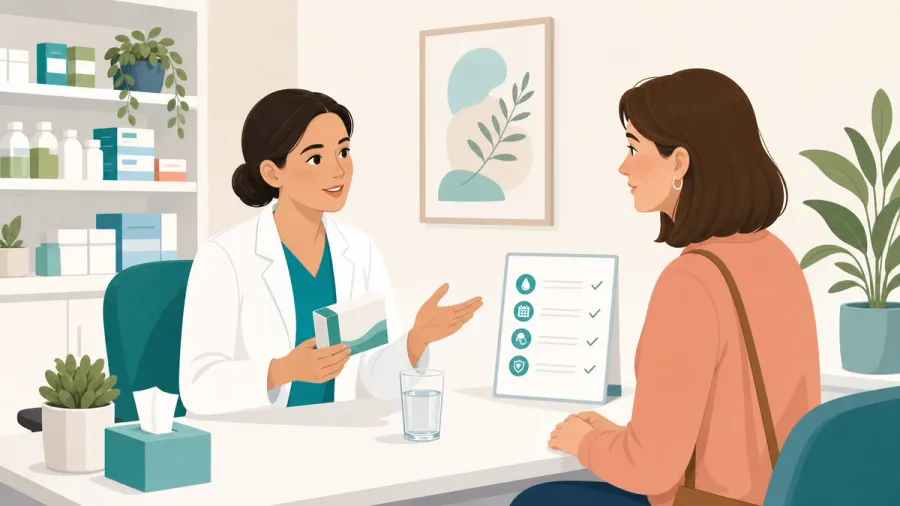
The pharmacist will take you to a private consultation area, not discuss your symptoms over the counter in front of other shoppers. They will work through a structured symptom checklist, ask when things started, whether you have had UTIs before, and whether you have taken antibiotics in the past few months, since frequent recent use changes the picture.
If you meet the local protocol, the pharmacist can recommend symptom relief and may supply a short course of antibiotics. They should explain how to take it, what side effects to watch for, how soon you should feel better, and exactly when to seek medical help if you do not improve. As a rule of thumb, if you are not noticeably better within about two days of starting treatment, that is your cue to see a doctor.
If you do not meet the criteria, the pharmacist should tell you why and point you to the right next step, whether that is a GP, an urgent care clinic, a sexual health clinic, or an emergency department. A referral is not the service failing; it is the service working.
Self-care that genuinely helps
Alongside any treatment, drink plenty of water to keep flushing the bladder, do not hold on when you need to go, and use simple pain relief such as paracetamol if that is suitable for you. Urinary alkalinisers (the sachets that make urine less acidic) can ease the sting for some people, but ask the pharmacist first, because they are not suitable with every antibiotic or every medical history. Cranberry products are popular, but the evidence for treating an active infection is weak, so do not rely on them in place of proper assessment.
Practical Example: A 29-year-old in Newcastle wakes on a Saturday with classic bladder UTI symptoms and no GP appointment until midweek. She uses search for pharmacies to find a nearby chemist listing a UTI service, phones to confirm a pharmacist is on, and goes in. In the consultation room the pharmacist checks she has no fever, no back pain, is not pregnant, and has not had repeated infections, then supplies a short antibiotic course with clear advice to return or see a doctor if she is not improving in two days. She starts treatment that morning instead of suffering through the weekend.
Using the directory
If you are travelling or cannot get a GP appointment, use search for pharmacies and look for services such as women’s health, UTI consultation, minor ailment care, or pharmacist prescribing. Phone ahead, because not every pharmacy offers the service and availability changes with staffing.
In larger metro areas you can start with state pages such as pharmacies in NSW or pharmacies in Victoria, then filter by suburb and opening hours.
Official sources to check
Rules keep changing as state pharmacy programs expand, so check before you rely on a pharmacy visit:
Pharmacy UTI services are a genuine convenience for low-risk symptoms, and for a lot of women they take the misery out of a long weekend. They are not a substitute for urgent care when the signs point to a kidney infection, a pregnancy complication, or serious illness. When in doubt, get seen.