Chemist Find
 · Editor · first-aid · 4 min read
Clinical review: pending
Treating Weekend Warrior Injuries on the Northern Beaches
A guide to managing recreational sports strains, sprains, and joint pain with pharmacy-supplied braces and targeted treatments.

The Northern Beaches run on weekend sport. There is dawn surfing at Manly, Saturday rugby and footy across Narrabeen and Pittwater, netball courts full by 8 am, and an endless stream of runners and ocean swimmers from Freshwater to Palm Beach. All that enthusiasm comes with a predictable side effect: the Monday-morning limp. Throwing yourself into high-intensity recreational sport on the weekend, often without much of a warm-up, is how strains, sprains, and joint pain happen. Knowing how to treat these “weekend warrior” injuries straight away with pharmacy supplies can genuinely shorten your recovery and stop a minor tweak becoming a lingering problem.
Immediate care in the first 48 hours
What you do in the first two days after an acute injury, like a rolled ankle, largely sets how fast you heal. The familiar RICE approach, Rest, Ice, Compression, Elevation, remains the sensible first response. Pharmacies carry good-quality reusable hot and cold gel packs, and the timing of each matters. In the first day or two, cold is your friend: applying ice (wrapped, never directly on skin, around 15 to 20 minutes at a time) reduces swelling and numbs the sharp early pain. Heat comes later. Once the acute swelling has settled after a few days, heat therapy can help relax the tight, overcompensating muscles around the injury. Using heat too early on a fresh injury can actually increase swelling, so save it for the recovery phase.
Rest does not have to mean total inactivity for days, but it does mean backing off the thing that hurt you. Pushing through a fresh sprain is the classic way to turn a one-week injury into a one-month one.
Anti-inflammatories and pain relief, used safely
Not all pain relievers do the same job. For many sports injuries, calming the inflammation matters as much as masking the pain. Pharmacists can recommend specific over-the-counter Non-Steroidal Anti-Inflammatory Drugs (NSAIDs) and tell you how many days of use is appropriate, because these are not meant for open-ended daily use. Topical anti-inflammatory gels are a great option for a localised injury like a sprained ankle or sore knee, delivering the medicine to the spot with less effect on the stomach than tablets.
NSAIDs are not right for everyone, and this is a real safety point, not a formality. Tell the pharmacist if you have asthma, kidney disease, a stomach ulcer or any history of gastrointestinal bleeding, or if you take blood thinners, because NSAIDs can interact with or worsen all of these. In those cases the pharmacist may steer you to paracetamol instead, which is gentler on the stomach and kidneys.
Compression braces and wound care
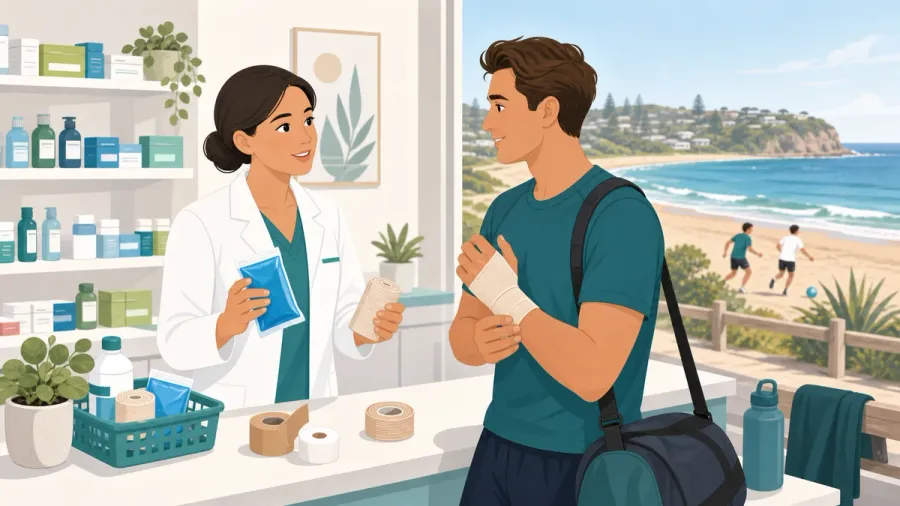
Stabilising a tweaked knee or a sprained wrist protects it from further damage while it settles, and it makes day-to-day movement more comfortable. Pharmacies stock a range of compression sleeves and rigid braces suited to different joints, and the staff can help you pick the right type and size rather than guessing online. If your sporting mishap left you with scrapes, gravel rash, or turf burn, pharmacies also offer Wound Management advice and dressings to prevent infection and minimise scarring, which matters more than people think for grazes that keep reopening.
Practical Example: A player rolls her ankle during a Saturday morning netball game at a Narrabeen court and feels it swell almost immediately. Rather than sit and wait, she sends a teammate to search for pharmacies nearby. They come back with a reusable ice pack, a topical anti-inflammatory gel, and a supportive compression bandage. She ices it in 20-minute stretches through the afternoon, keeps it elevated, and wraps it for support, treating the joint properly from hour one instead of hour twenty-four. The early care means she is walking comfortably within days rather than weeks.
One firm caveat: if the injury is severe, you cannot put any weight on the joint, it looks deformed, or the pain and swelling are extreme, do not treat it as a routine sprain. Seek urgent medical care or get an X-ray, because a missed fracture or serious ligament tear needs proper assessment.
Official sources to check
For standard strains and sprains, browse pharmacies in Sydney to find the right braces, gels, and pain relief to get you off the couch and back on the field.